Run a Police Station Vehicles and Fleet Guide
Build a garage that matches call threat levels instead of collecting idle chrome.
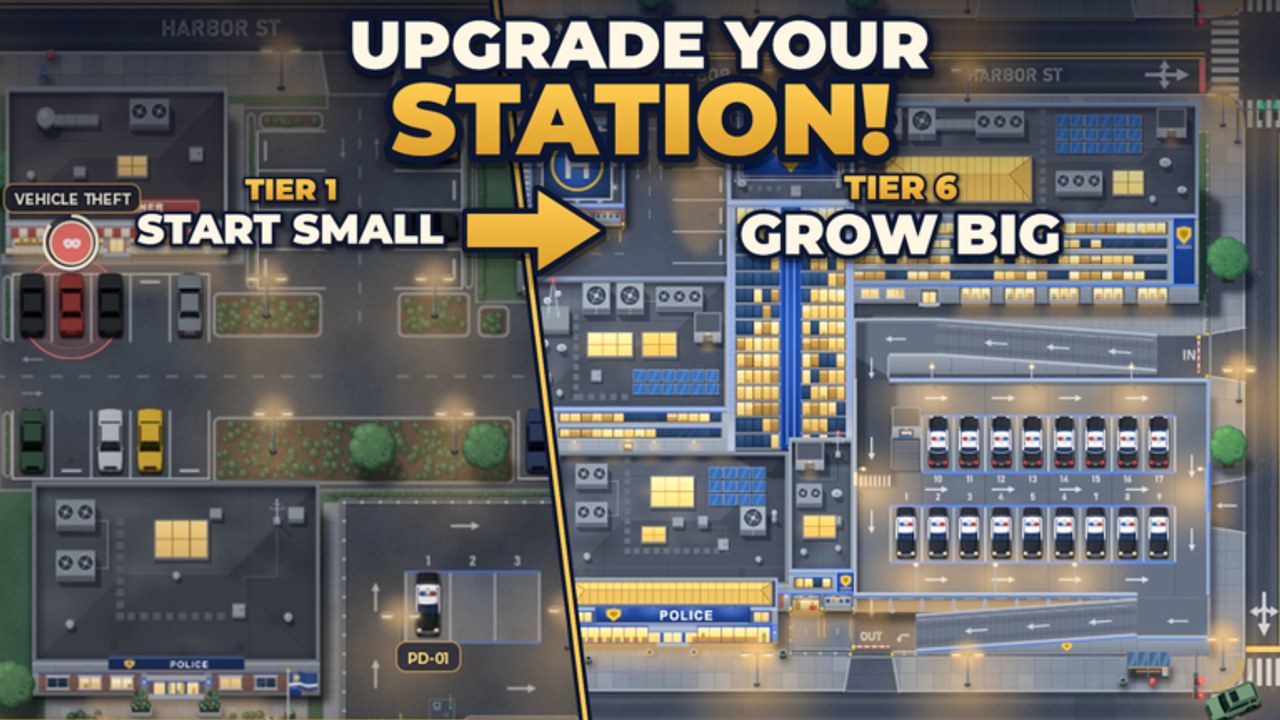
Your fleet turns trained officers into completed calls in Run a Police Station. The Roblox simulation and tycoon from Cute Puppies Studio asks you to collect and upgrade police cars, SUVs, tactical vans, and armored vehicles while the headquarters climbs six tiers. This guide explains class roles, upgrade timing, when to buy each layer, and how to avoid a glamorous garage that never leaves the lot. Exact sticker prices are omitted on purpose; check the live shop UI after every patch.
Read Getting Started if you still lack a first cruiser. Read Hire and Train Officers if you keep buying cars nobody can drive well.
Fleet classes and roles
Police cars are the backbone. They answer ordinary volume, teach you travel timing, and usually deliver the best early return on investment. They also open many Hot Pursuit chases before you own anything fancier. If you can only upgrade one thing in the garage, upgrade the car you dispatch every five minutes.
SUVs sit in the flexible middle. They help when calls need a bit more presence or utility than a basic cruiser without jumping straight to heavy armor. Use them as default mid-threat responders, secondary chase units, and Most Wanted backups once cashflow is stable.
Tactical vans shine when scenes feel group-oriented or heavier than SUV work—especially SWAT calls, stacked robbery entries, and structured heist arrivals. They are poor day-one purchases if your board is still full of soft accidents, but they become important as bank heists and missions ramp up.
Armored vehicles are specialist tools for SWAT spikes, dangerous emergencies, and high-threat bank heists. They are expensive in time and opportunity cost even when the coin price looks affordable after a lucky code. Buy armor when those calls actually appear and your officers—ideally with a Captain or trained tactical lead—are ready to justify the send.
Role detail for chase versus heist packages continues on Chases and Heists; SWAT and detective assignment context sits on Missions and Divisions.
Community role rankings for a young meta live on the Vehicles tier list. That page is explicitly community-oriented—not an official Cute Puppies Studio ladder—so treat S/A/B/C labels as conversation starters you verify in-session.
When to buy
Use purchase gates tied to real bottlenecks:
- First car — as soon as you can staff it. Required for the day-one loop.
- Second patrol or first SUV — when one unit cannot keep up with call volume.
- Tactical van — when mid and heavy calls outpace what SUVs finish cleanly.
- Armored unit — when dangerous emergencies are common enough that soft vehicles fail or feel unsafe.
- Duplicates — only after training and HQ capacity support parallel dispatch.
If Station Tiers still soft-cap garage or progression, spend on the HQ step before another novelty hull. Capacity beats chrome.
What to upgrade first
Upgrade along the path of maximum dispatches:
- Level the class you send most often.
- Prefer upgrades that shorten response frustration or raise completion confidence over purely cosmetic packs.
- Split upgrades across two workhorse vehicles before maxing a showpiece that leaves once per hour.
- After a patch, reassess—Updates may change which class feels crisp.
ROI thinking from How to Earn Money applies directly: an upgrade that raises successful completions per hour is good; an upgrade that only screenshots well is optional.
Pairing fleet with dispatch
Matching rules from the dispatch guide, restated for garage chiefs:
- Accidents and standard volume → police cars, maybe SUVs.
- Hot Pursuit chases → upgraded police cars or SUVs with pursuit-trained or K-9 staff; keep armor off the opening sprint unless the scene turns violent.
- Hot robberies and bank heists → SUV or tactical van depending on severity; bring armored backup for the heaviest vault jobs.
- SWAT calls and dangerous emergencies → tactical vans or armored units with trained tactical/Captain leads.
- Detective cases → whatever gets an investigation officer on scene reliably; speed matters less than finishing clean.
- Never send your only armored asset to a trivial accident while a SWAT or heist ping waits.
Officers matter as much as horsepower. A max vehicle with an untrained driver is a delayed failure. Keep the hire–train loop warm.
Pacing fleet against HQ and divisions
Six station tiers exist partly so the garage can grow without breaking the early economy. Expand HQ when you need slots, division access, or mission gates; expand fleet when the roads are the constraint. Unlocking divisions feels great, but a division badge without the vehicles those missions imply is unfinished business. Complete missions with the classes you already upgraded whenever possible so rewards reinforce the fleet you own.
Promo codes sometimes inject vehicle-related value. Spend those gifts on the next logical class in the ladder above, not on skipping straight to armor while patrol cars still sputter.
Multiplayer garage etiquette
With up to twelve players, label who owns which ready unit if the place allows shared confusion. Do not joyride the emergency package right before a dangerous call. Announce big purchases so teammates stop saving for the same redundant hull. Coordinated fleets clear boards; mirrored impulse buys create a parking museum.
Fleet health checklist
- At least one upgraded workhorse car online for patrol and Hot Pursuit openers.
- A mid class (SUV or equivalent) ready for spicier volume and Most Wanted backups.
- Tactical and armored options unlocked for SWAT calls and bank heists when the mix demands them.
- No more hulls than you can staff and train—including a seat plan for K-9 handlers when that unit is active.
- Next purchase tied to a written bottleneck, not boredom.
Related reading
- Dispatch Calls — priority and send logic.
- Chases and Heists — chase vs heist vehicle packages.
- Hire and Train Officers — who sits in the seats.
- Station Tiers — when HQ must grow first (Headquarters badge at tier 6).
- Guides Hub — full how-to index.
- Tier List Hub — community rankings for vehicles and officers.
- Scripts — irrelevant to honest fleet skill; skip risky tools.
A great fleet in Run a Police Station is a ladder you climb with the call board, not a shopping list you finish in one code windfall. Buy for roles, upgrade for tempo, armor for danger, and keep every parked unit one assignment away from useful work.
Frequently Asked Questions
Quick answers for chiefs building a stronger precinct.
Which vehicle should I buy first?
A basic police car you can staff immediately. Establish patrol coverage before SUVs, tactical vans, or armored specialists.
When are armored vehicles worth it?
When dangerous emergencies and high-threat robberies are common enough that softer classes struggle, and when trained officers are ready to drive them.
Should I upgrade one car fully or several lightly?
Upgrade the class you dispatch most, and prefer two solid workhorses over one max showpiece that rarely leaves the garage.
Where can I see vehicle class rankings?
Open the Vehicles tier list. It is a community-oriented ranking for a young game and should be verified against your live call mix.
Which vehicles should I use for chases, heists, and SWAT?
Use upgraded cars or SUVs for Hot Pursuit, tactical vans or armor for SWAT and heavy bank heists, and keep a mid SUV for flexible Most Wanted backups. Details on Chases and Heists.